Are you ready for the greatest (!) tech event of the year?
How many rumors will prove for real?
Will the new Apple iPhone 5 live up to all expectations?
MediaPost just published this cool post, take a look!
Some hints?
Brennan Carlson, VP of strategy at Lyris, called for search terms similar to tweets in microblogging sites like Twitter. He said Google and Twitter offer analytics tools, but can’t definitively make the connection through every single click. “You can assume the connection, but we’re not quite there yet,” he said. “You would need the full firehose from Twitter and API from Google, and then you could build an algorithmic data mining modeling platform that can draw the connections using statistical analysis.”
Facts? Figures? Just look at 2012 USA Elections:
For those keeping score, discussion around jobs consistently generated the highest and the most top-of-mind issue, followed by the economy and healthcare at the 2012 Democratic national convention last week, according to a study released Monday by General Sentiment.
Take, for example, the fact that Bill Clinton generated more social buzz than President Barack Obama. Clinton’s mentions rose 1264.1%, racking up 1,322,209 mentions, compared with Obama’s 724,545 — and more than half of the online discussion about all DNC speakers, according to online social buzz tracker General Sentiment.
Although online discussion about Obama grew throughout the convention, peaking Friday at 1,192,077 mentions, his Sentiment fell more than 26% following his acceptance speech.
Today, I woke up with a strange feeling.
To me 9/11 means several things and, as most people in the world, I remember where I was in that day and what I was doing – something personal and painful.
Then the world changed.
This morning I asked myself: “What is today media coverage of the 9/11 event, after 11 years?”
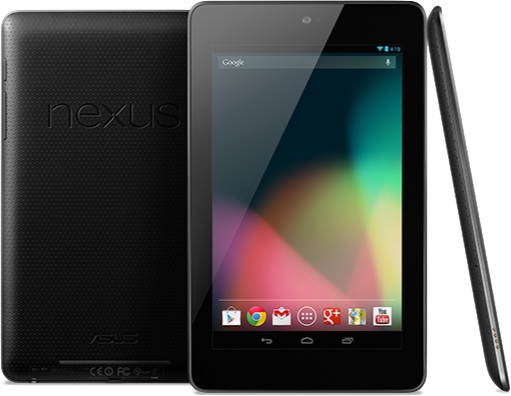
Google just announced the brand new Nexus 7: an Android tablet which will face fierce competition from both Android-alikes and iOS-newcomers (iPad-mini?).
Here are some features:
powered by quad-core NVIDIA Tegra 3 processor (which integrates a 12-core GPU),
1 GB RAM memory,
two versions: 8 GB and 16 GB,
7″ display with a 1280×800 resolution,
battery, as stated by Google, lasts up to 9 hours of HD video playback, 10 hours of web browsing and 300 hours in stand-by,
comes with all popular Google apps preinstalled and allows access to a huge App market,
Android OS 4.1 Jellybean
The Nexus 7 may be just one month ahead of the much-hyped iPad Mini (or whatever it will be called), and gets delivered in a moment when, given the recent Apple-vs-Samsung Court Ruling, mobile OSes and tablet wars are really hot.
Nice post from Jason’s blog and a perfect question too: why is 8-bit technology so important these days?
Simply put because it’s where we all come from!
The most common 8-bit CPUs of the time included the Intel 8088 (used in the original IBM PC), the Zilog Z80 (used in many early home computers such as the Tandy TRS-80, Sinclair ZX-81, and Osborne 1), and the MOS 6502 (used in the famous Apple II, Atari 400/800 and VCS, as well as the Commodore PET, VIC-20 and 64). These same CPUs were also used to create the custom computer boards used within nearly all video arcade games.
A few things about great NASA Curiosity mission you may have missed!
Apple was almost everywhere in this mission… just check out this photo of the EDL Ops Center (Entry-Descent-Land Operation) :
Mac OS X looks like the weapon of choice of Rocket Scientists, due to its Unix-ish roots in BSD.
Moreover, looks like the RAD 750 processor, running the Curiosity Rover, it’s an evolution of the beloved PowerPC 750, right the one that powered G3-series Macintoshes.
Talking about hardware, Gizmodo reports this fun comparison with an iPhone 4S…
If you’re more curious about the Rover’s hardware and gear, take a look at Time’s Page.
More details about the computing side of the Rover:
Rover Compute Element (RCE)
Curiosity employs two computers, one for daily operation and one for backup, each packing a 200 MHz IBM RAD750 (based on IBM’s late 1990s 32-bit PowerPC processors), 256 MB of RAM, 2GB of flash storage and running a multitasking operating system called VxWorks (used in multiple other spacecraft, including both Spirit and Opportunity rovers).
Twitter has just rolled out a new feature that will set a new standard (maybe): the cashtags!
Ok, we’re all used to hashtags, but this is different: cashtags are related allow users to click on stock (or “ticker”) symbols in any tweet to view search results for those stocks and companies.
This is a search result for Tweets about $FB, that’s Facebook:
So, now it’s not only matter of # but also of $ (it’s always been, by the way…)
Techcrunch, though, reports a pretty interesting story: StockTwits said it already used the cashtag – and in some way invented it.
In a blog post entitled “The Twitter Hijacking of Stocktwits $ … The Cashtag,” StockTwits co-founder and CEO Howard Lindzon says:
It’s interesting that Twitter has hijacked our creation of $TICKER ie. $AAPL. It only took four years to ‘fill‘ this hole, though a few months back they told me in a detailed email it was not a hole they wanted to fill.
It’s a promotional video produced on behalf of Stockholm, Step2 Communication and performed at MIPIM in Cannes by communication experts and magicians Charlie Caper and Erik Rosales.
As you can see, several iPads were used, along with some old magician’s tricks, and perfect timing too!
It’s a cool way to promote a City, to attract people, investors – or just to communicate and thrill wide audiences!
MacSwitching.com
The resource to people switching to the Mac (and to MacLife altogether): Mac OS X integration, Mac-Windows interoperability, iPod and most Macintosh-related topics!
iPhone & iPad
theiFile.com
iPod, iPhone, iPad and all things i-related

 Are you ready for the greatest (!) tech event of the year?


 Nice post from


