Yes, this is ‘yet another tiny display for vintage computers and videogames’.
The only difference is that I did it 😉 with very few parts and a low budget.
Features first
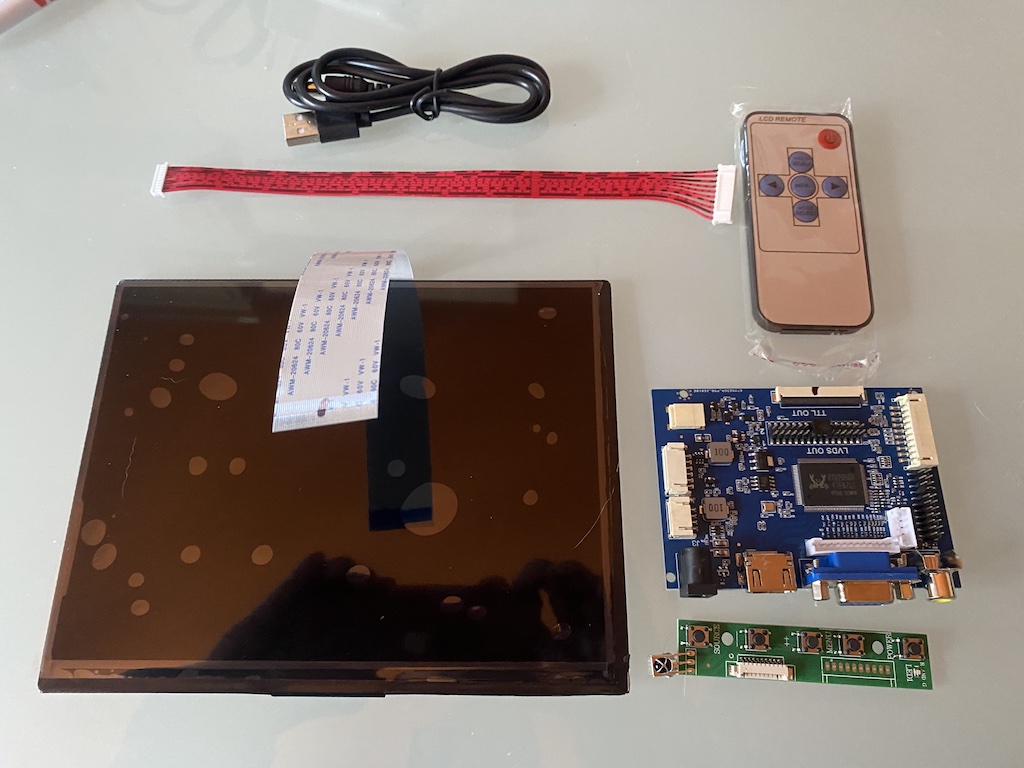
It all began with an Amazon product with pretty good features:
– 8 inches LCD display
– 4:3 aspect ratio
– 1024 x 768 pixel resolution
– several video input ports
– low price.
This one, to be more accurate.
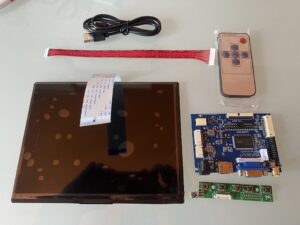
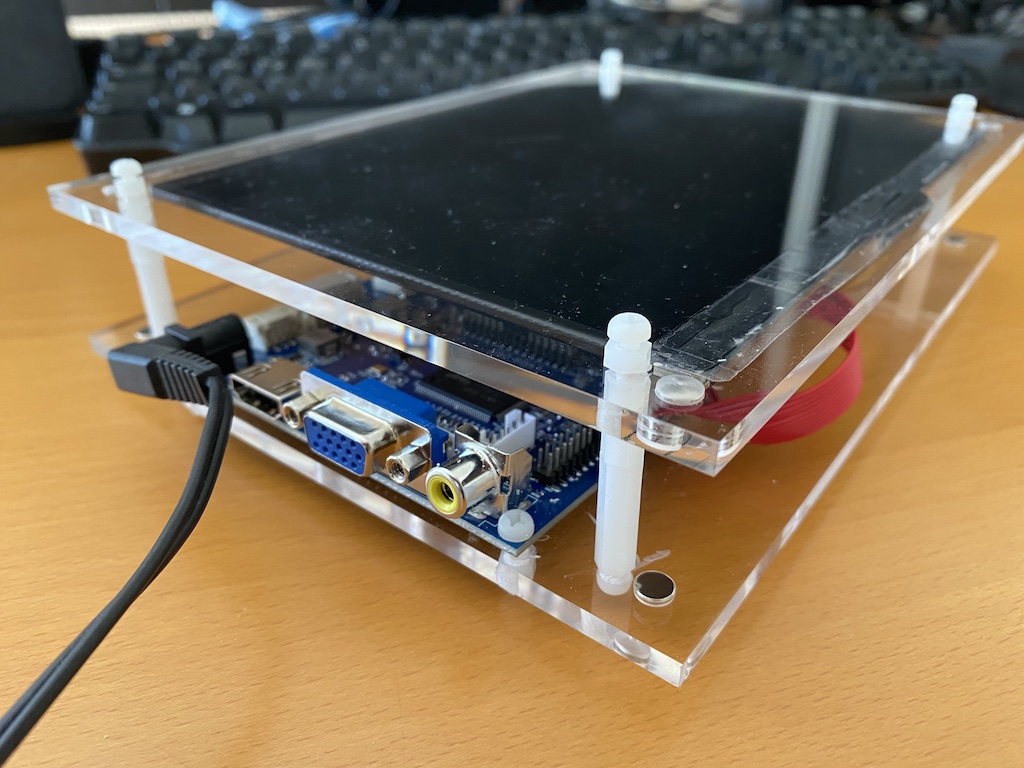
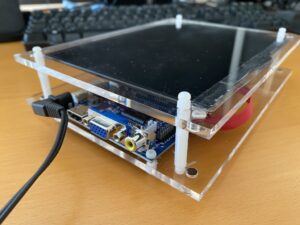
This display unit sports HDMI + VGA + composite video inputs and can be powered with a single source 5V to 12V @ 2A (or something like that); has a small board with control buttons and an infrared remote that does almost everything.
It’s being sold as a barebone circuit, with all flat cables loose, for some 37 euros (Amazon price, at the moment): quite a bargain, actually.
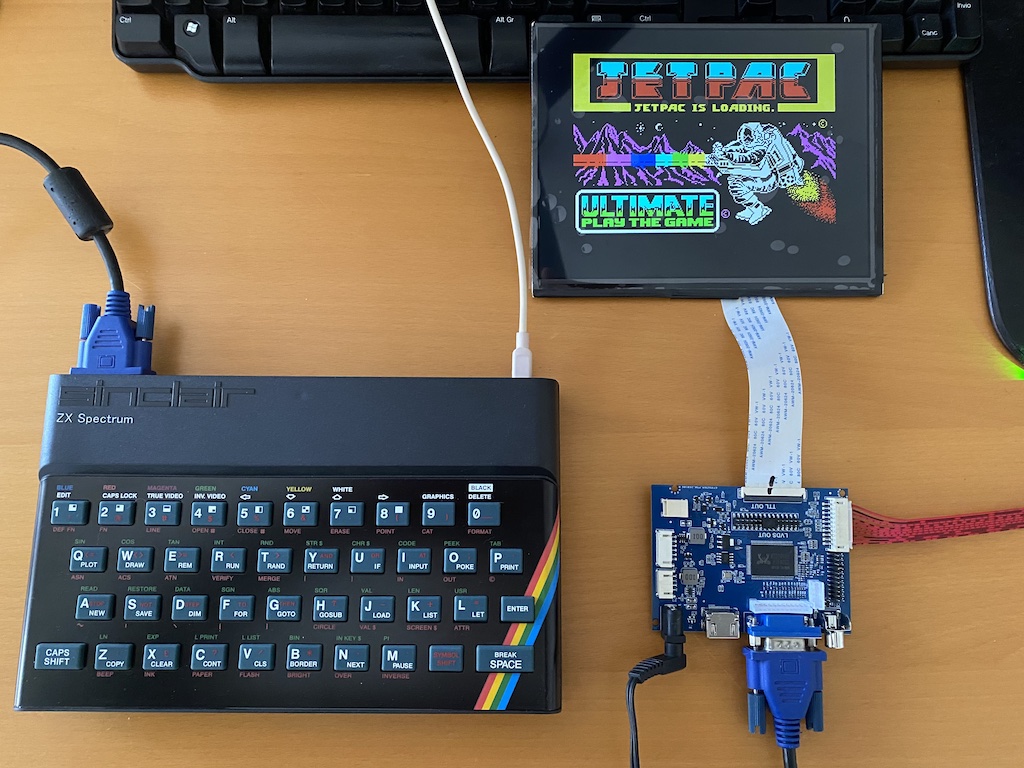
I ordered mine and it was running in a snap with all my computers and videogames: first test was with a ESPectrum, a modern replica of the venerable ZX Spectrum with VGA output; picture is almost perfect!
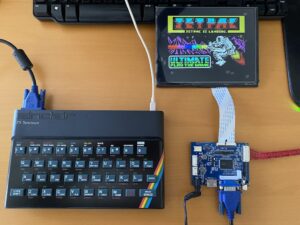
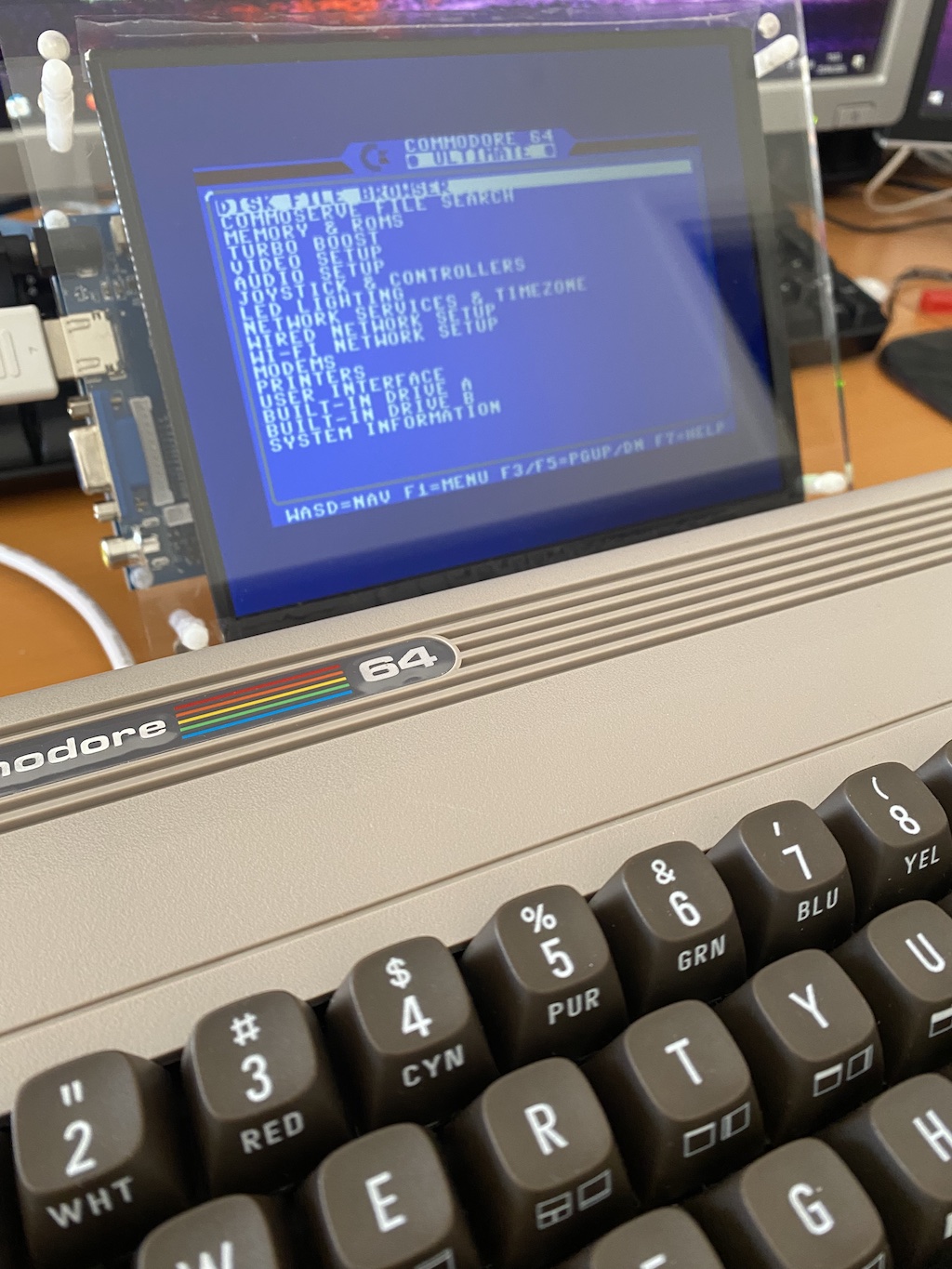
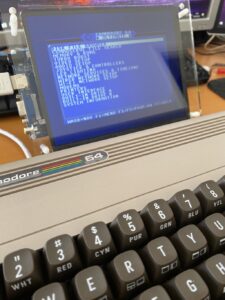
Time to test is with a Commodore 64 Ultimate on the HDMI output: crisp image, no lags, ok!
Composite video on a regular ZX Spectrum works fine BUT is somehow darker and may need some brightness adjustements: more testing is needed…
The case of the missing case.
Image quality counts but this monitor wasn’t exactly usable, so I began looking for some sort of case.
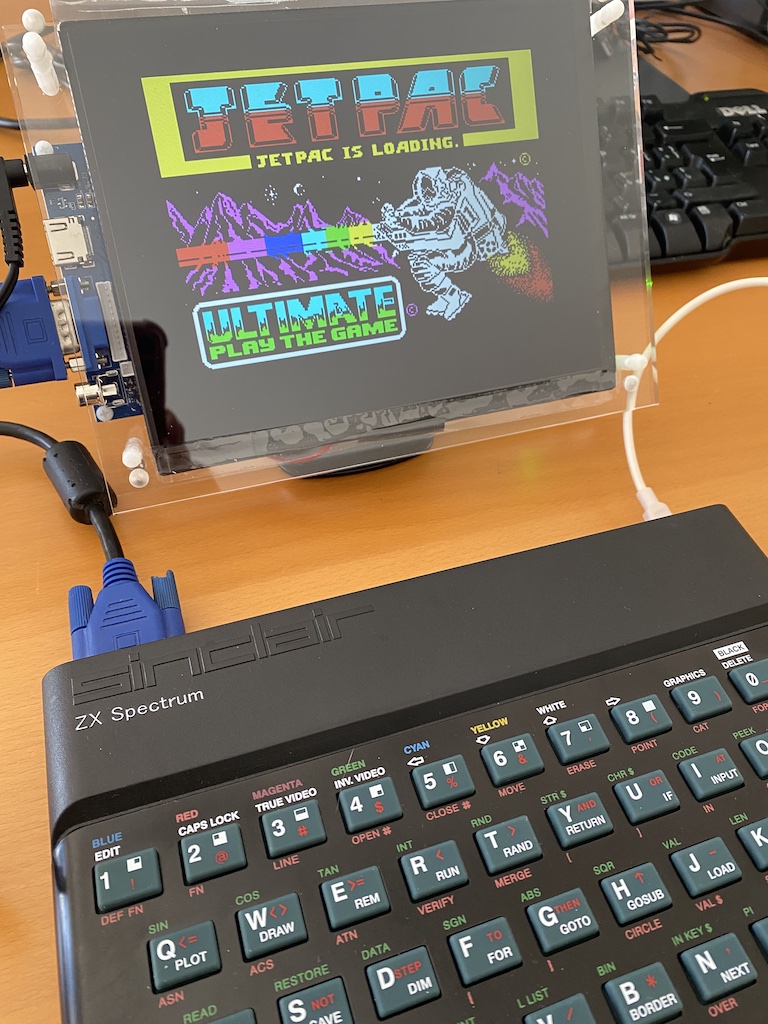
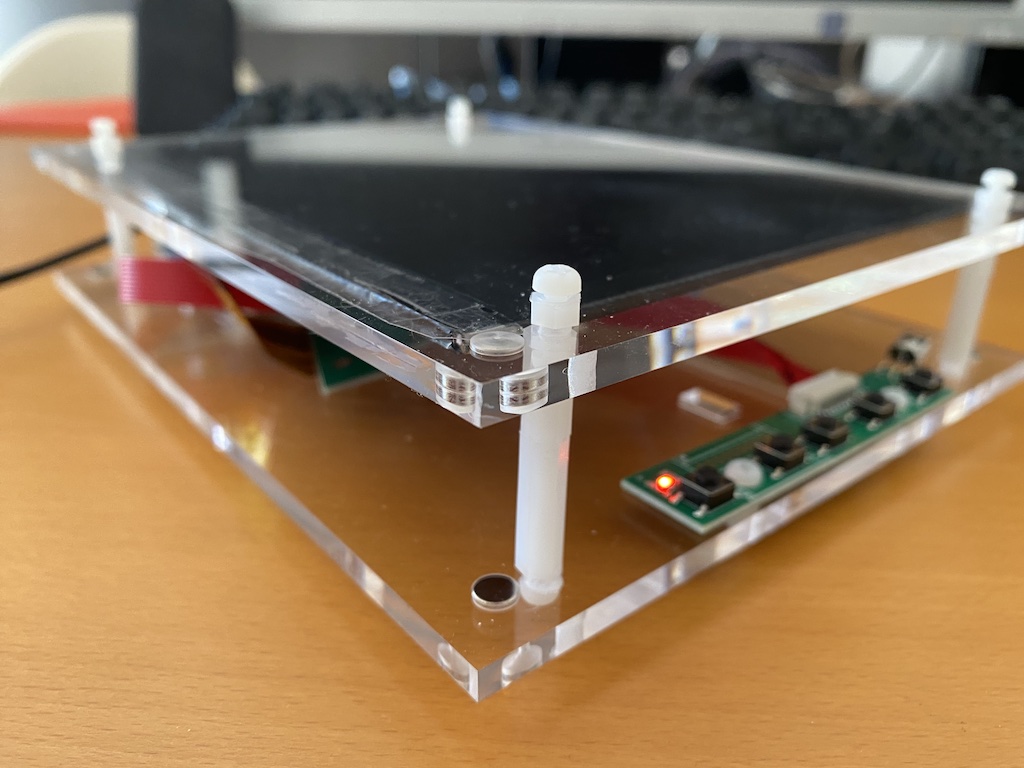
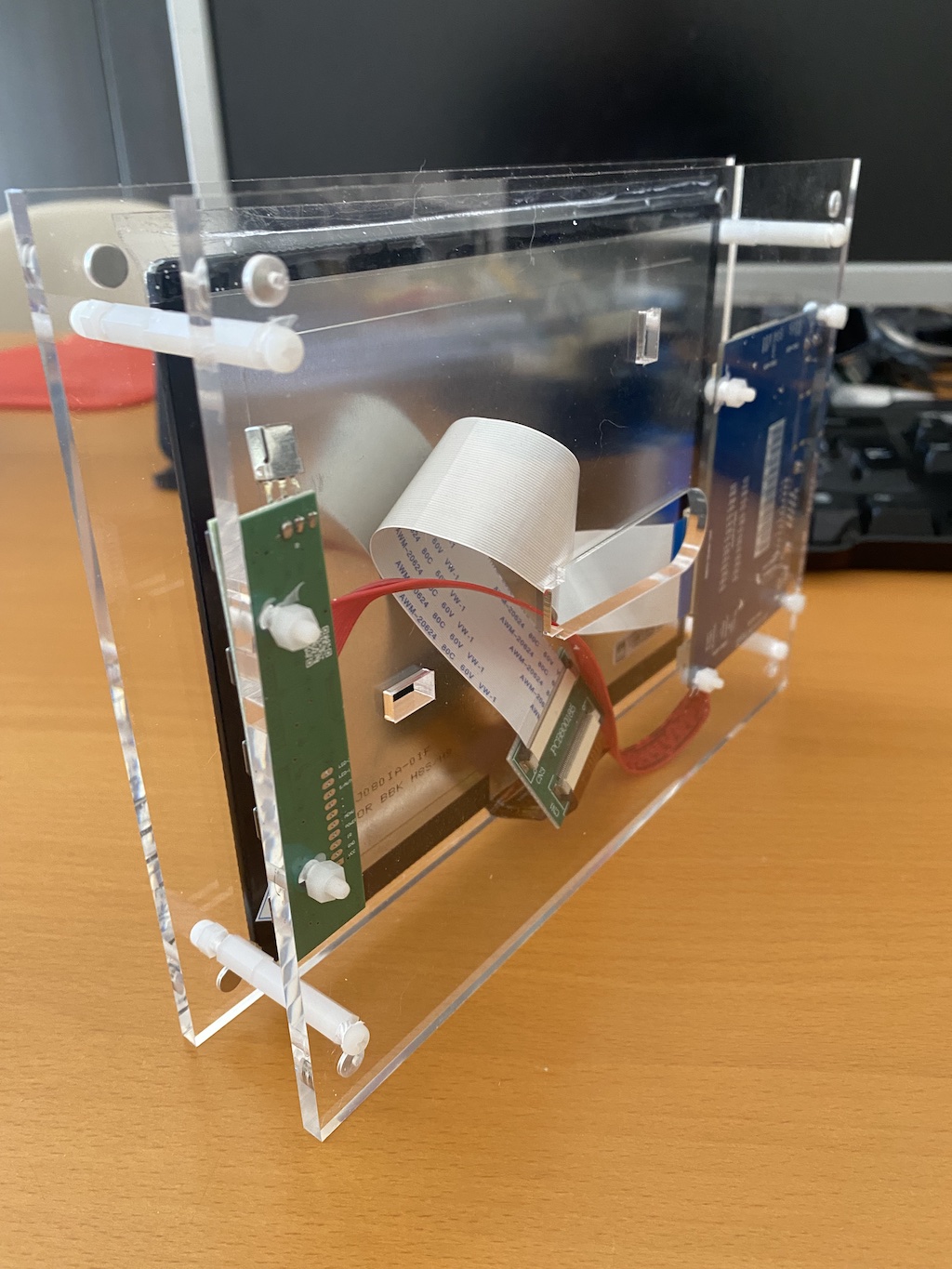
A nice photo frame made of two plexiglass pieces, less than 10 euros, was perfect fit – not only for size, but also for any drilling tweaking that became necessary.
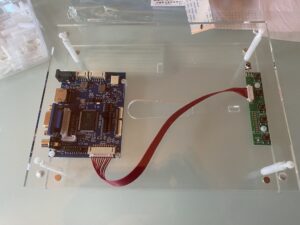
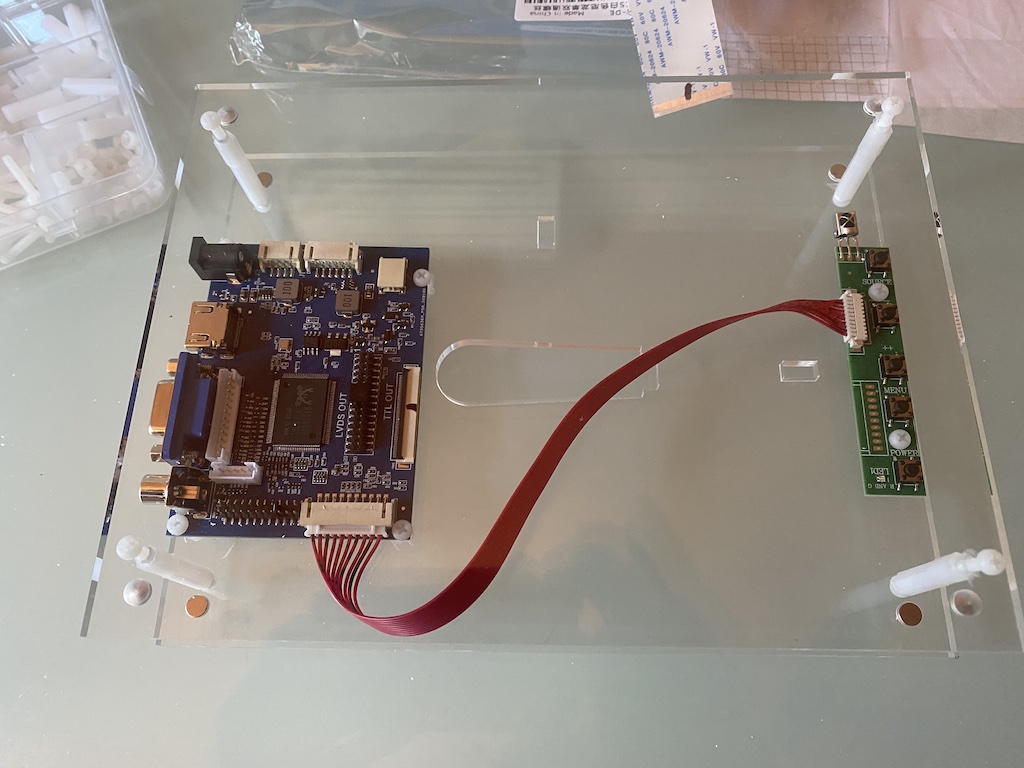
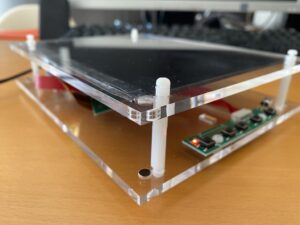
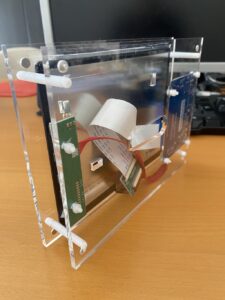
I used white plastic nuts and bolts (the one used for spacing PCBs) and some not-so-perfect drilling to assemble the whole thing.
On the lower piece of plexiglass I fixed the driver board and the button board; the LCD itself is taped to the upper part of the frame.
Grand total is less than 60 euros.
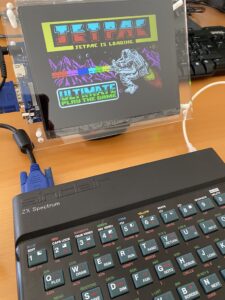
As a result, I have a very small yet usable monitor with all needed video ports, an infrared remote (which I’ll use very seldom); something I quite built from scratch and that’s compatible with almost any computer/videogames/PCB I have around here…
Moreover, already tested an almost-portable solution using a huge battery pack powering both the ESPectrum and the LCD board!
What’s next? Maybe an RF-to-VGA converter in order to add even older home computers to the party…

 You use ChatGPT on a daily basis.