How social is B2B: facts and figures why businesses should use social media

InsideView‘s new infographic shows how effective social media marketing has become for B2B.

A few hints:

  • IBM reported a 400% increase in sales, in a pilot program of social selling,
  • 41% of B2B companies on Facebook report generating leads,
  • 67% more leads/month for companies who have an active blog

social media b2b

[Via InsideView]

Posted in Business, Business Intelligence, Business Model, Business Plan, Infographic, Social Era, Social marketing, Social Media, Social network | Tagged , , , , , | Leave a comment

Social Media TV Charts: who wins, who loses, where are TV viewers heading to?

Mashable reports with this cool infographics about Social TV trends and charts what happened in a middle-March week in the Social TV arena

social tv chart

[Via Mashable]

Posted in Infographic, Report, Social Era, Social family, Social Life, Social marketing, Social Media, Social network, Social news, Social survey, Social TV, TV ads, Uncategorized, User Engagement, User experience | Tagged , , , , | Leave a comment

Which devices are used the most by social media users? An infographic explains and gives much more hints

Believe it or not, 5% of US adults are getting news on full-featured computers (be it a desktop or a laptop), on tablets and on smartphones, whereas computers/smartphone users sum up to an interesting 34% of the grand total!

infographic Role of Mobile Devices, Social Media in News Consumption

[Via PBS.ORG]

Posted in Facebook, Mobile advertisement, Mobile gaming, Mobile marketing, Social gaming, social habits, Social Life, Social marketing, Social Media, Social network, Social news | Tagged , , , | Leave a comment

When trailing old technology is still leading, up and running in real-world applications

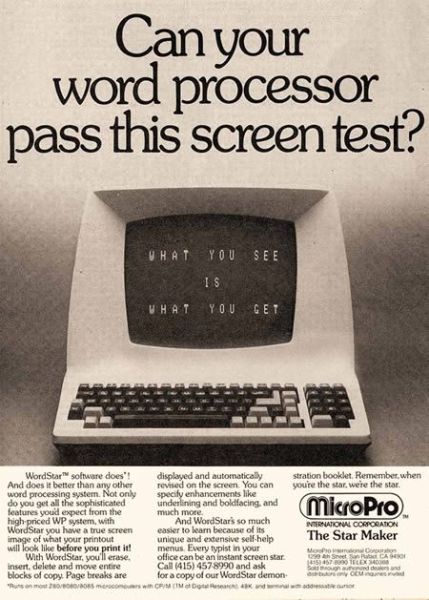
retrocomputerOk, I love retrocomputers and all old tecnology stuff… this PCWorld article depicts a real-world scenario where older (non-leading, actually trailing, technologies) are still running everyday tasks – some of them are even life-saving related.

From 1970s minicomputers used for military programs (including nuclear weapons) to an IBM punch-card system still keeping the books at a Texas filter supplier, these are the computers that time forgot.

From Apple ][s to CP/M, from punched cards there’s still some lovely hardware out there running fine even in Terabytes-era and multi-core kingdom.

A long time ago, I used to follow The Trailing Edge of Technology which is no longer available but still can be seen here on Hytherion

[Via PCWorld]

Posted in Computer, Computer History, Hardware, Retrocomputer | Tagged , , , | Leave a comment

Social TV: ConnecTV announces March Madness: basketball will never be the same – social

I love Social TV!

I guess it’s the next big thing putting together all tech stuff: mobile + social media + TV.

social tv

USA Social TV company ConnecTV, has announced its March Madness line-up of innovative content features for the biggest month in college basketball sports television – including a custom Final Four “blind pool” multi-player game, deep real-time play-by-play sports statistics, a “time-out” detector to fill action lulls with compelling information, a “go back” function to see previous plays, along with seamless social integration that lets “view-sers ” share the greatest game moments with friends across the social-sphere. The free ConnecTV app for iPad is available from the Apple App Store or directly from ConnecTV.com for Macs and PCs.

[Via AppMarketTV]

Posted in App world, Apple, Social Era, Social family, Social gaming, social habits, Social initiatives, Social Life, Social marketing, Social Media, Social network, Social news, Social survey, Social TV, Television, TV Series, User Engagement, User experience, User survey | Tagged , , , , , | Leave a comment

Learning from the past of computer science: Rear Admiral Grace Hopper video interview

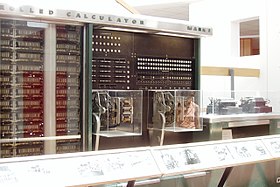
mark i computer grace hopperThinking of this tiny yet so strong woman should really think about how far we’ve gone from the very early calculators.

Watching this 1983 CBS interview with Rear Admiral Grace Hopper will reveal (to those who didn’t know) how much she did to computer science and how much IT has gone far from the very early post-WWII days when Hopper, then 36, stopped teaching Math and began debugging (she’s credited of inventing the term itself) the Mark I computer.

During the interview I discovered she taught a very smart lesson: how long does electricity signals (i.e. bits) travel in a nanosecond?
Watch out for the answer!

[Via CBS]

Posted in Computer, Computer History, History, Supercomputer, Tech industry, Technology | Tagged , , , , | Leave a comment

New rules for Social media – a 4-part article about social era and industry culture

social network eraHere comes a 4-part article from HBR.org (which I love) and Nilofer Merchant (which I didn’t knew about but I’m glad I discovered).

It’s about social media and its acceptance in industry culture.

Beginning from well-known examples like Facebook, Twitter (you know…), author Merchant shows how much has changed with social media and how much some well-estabilished brands are missing the point with social era.

Facebook, KickStarter, Kiva, Twitter, and other companies thriving in the social era are operating by the rules of the Social Era. They get it. They live it. And to them, it’s ridiculously obvious.

But too many major companies — Bank of America, Sony, Gap, Yahoo, Nokia — that need to get it, don’t. A friend of mine who runs a venture capital firm is emblematic of the bias I encounter in the Bay Area. He tells me to ignore the big enterprises; that they are not the future. But I’m not willing to give up on these firms. I think we can get the 800-pound gorillas of our day to act more like 800 gazelles — fast, nimble, and collaborative.

About the way we all browse, choose and buy on social networks:

People buy two categories of things: The distinct, and the generic. The distinct items are the things that have a limited quantity, that are artisanal in nature, and that are worth paying a premium for. The generic items are, well, the things you might find on Amazon.
When companies like Best Buy or Target are simply aisles of what you can find online, then it’s easy enough to become a storefront for Amazon. Everything that is undifferentiated is going to be delivered in ever more efficient, low-cost ways. Porter’s value chain is well suited for this mass-market, cost-driven approach, where customers remain at the end of the value chain.

So what?

But for organizations wanting to thrive in the social era, being distinct is key to both profitability and winning. While there has always been a market for bespoke, differentiated items, until very recently that market served a tiny fraction of the uber-rich. But today, both macroeconomic forces, and technological advances mean that customized products aren’t just for the one percent. Instead, customized products and experiences can be for everybody, at least some of the time.

How will the smartest, nimblest companies move away from less-profitable generics and into more-profitable distinct goods and services? By using the rules of the social era.

Here’s a summary of all posts:
Part 1: Rules for the Social Era
Part 2: Social Means Freedom, for Better or for Worse
Part 3: Why Porter’s Model No Longer Works
Part 4: Why Social Marketing Is So Hard

Recommended.

[Via HBR.org]

Posted in Advertising, Business, Business Model, Case Study, Social Era, Social family, social habits, Social initiatives, Social Life, Social marketing, Social Media, Social network, Social news | Tagged , , , , | Leave a comment

Social sites and revenues? Do they make money (and how)?

USBundles.com published a great infographics answering to one of the hottest question these days in social media.
Do social network heavyweights make money? And… by the way… how?

This infographic from USBundles shows how the most popular social sites have become successful businesses, while still serving up those check-ins and live-stream videos you love.

Through its Venn Diagram, this infographic shows the multiple ways social networks make money.

Google exists in three circles – the red ads circle, the blue paying customers circle, and the web apps circle.

After you’ve had fun puzzling out which social companies make money in which ways, the infographic goes on to give us some pretty neat stats about the overall state of the social money-making ecosystem.

For instance, a total of 77 percent of major social networks derive significant revenue from ads, while only 10 percent are pursuing new revenue channels.

How Social Sites Make Money

[Via: USBundles.com]

Posted in Advertising, Business, Business Intelligence, Business Model, Business Plan, Facebook, Mobile advertisement, Online advertisement, Social gaming, Social initiatives, Social Life, Social marketing, Social Media, Social network, Social news, Tech industry | Tagged , , , , , | Leave a comment

Happy PI Day! That’s 3.14 ;-) and Albert Einstein’s birthday too!

pi day albert einsteinPI DAY & LIGHT – today is Pi day (3.14) and also Albert Einstein‘s birthday.

About PI Day:

Pi Day is a holiday commemorating the mathematical constant π (pi). Pi Day is celebrated on March 14 (or 3/14 in month/day date format), since 3, 1 and 4 are the three most significant digits of π in the decimal form. In 2009, the United States House of Representatives supported the designation of Pi Day.

About Albert Einstein, for science’s sake, let’s find out in under 60sec how he was the first to prove that light is a particle.

[Via MinutePhysics and ThinkTank Planetarium]

Posted in Educational, History, Science, Scientific Video | Tagged , , , , | Leave a comment

Facebook app top gainers: watch out for Draw Something and BranchOut!

facebook app top moversThis week top Facebook app movers were, according to InsideFacebook:

#  Name             MAU           Gain     Gain,%
1. Draw Something 12,900,000	+7,700,000 + 148%
2. Angry Birds    12,800,000 	+6,000,000 + 88%
3. BranchOut 	   7,800,000 	+1,500,000 + 24%

Draw Something by OMGPOP had massive growth with an increase of 7.7 million MAU. Angry Birds gained 6 million MAU. Open Graph applications from Yahoo, Dailymotion, BranchOut and Causes saw significant growth. Notably, Causes now has a banner on its website asking users to add the app to their Timelines.

Wathc out that, besides Angry Birds’ obvious success, comes a third place for Branchout, an emerging Social Job Network.

[Via InsideFacebook]

Posted in App world, Facebook, Facebook Advertising, Facebook App, Facebook Pages, Job search, Job seeking, Social gaming, Social Life, Social marketing, Social Media, Social network, Social news, Social survey, Software | Tagged , , , , , , | Leave a comment